CNC Machinery
How Does CNC Machining Work?
When a CNC system is activated, the desired cuts are programmed into the software and dictated to corresponding tools and machinery, which carry out the dimensional tasks as specified, much like a robot.
In CNC programming, the code generator within the numerical system will often assume mechanisms are flawless, despite the possibility of errors, which is greater whenever a CNC machine is directed to cut in more than one direction simultaneously. The placement of a tool in a numerical control system is outlined by a series of inputs known as the part program.
With a numerical control machine, programs are inputted via punch cards. By contrast, the programs for CNC machines are fed to computers through small keyboards. CNC programming is retained in a computer’s memory. The code itself is written and edited by programmers. Therefore, CNC systems offer far more expansive computational capacity. Best of all, CNC systems are by no means static since newer prompts can be added to pre-existing programs through revised code.
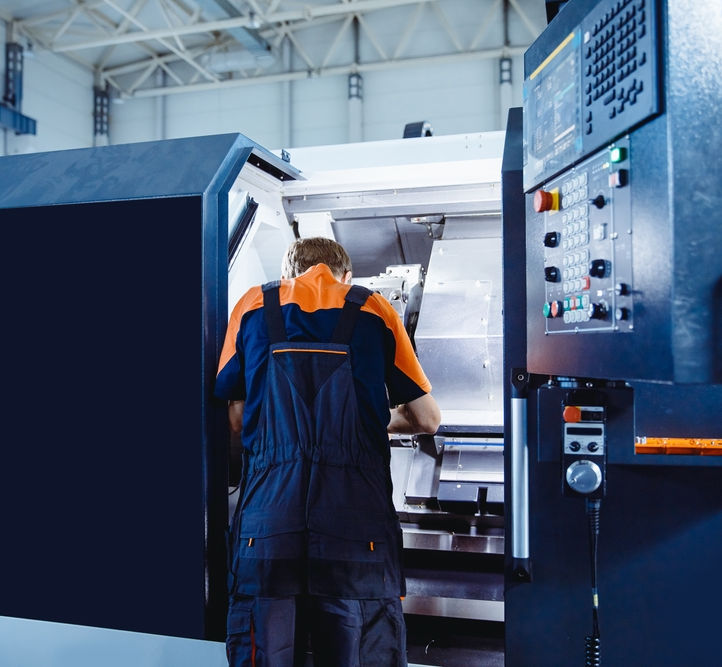
CNC Machine Programming
In CNC manufacturing, machines are operated via numerical control, wherein a software program is designated to control an object. The language behind CNC machining is alternately referred to as G-code, and it’s written to control the various behaviors of a corresponding machine, such as the speed, feed rate and coordination.
Basically, CNC machining makes it possible to pre-program the speed and position of machine tool functions and run them via software in repetitive, predictable cycles, all with little involvement from human operators. In the CNC machining process, a 2D or 3D CAD drawing is conceived, which is then translated to computer code for the CNC system to execute. After the program is inputted, the operator gives it a trial run to ensure no mistakes are present in the coding.
Due to these capabilities, the process has been adopted across all corners of the manufacturing sector, and CNC manufacturing is especially vital in the areas of metal and plastic production. Find out more about the types of machining systems used and how CNC machine programming fully automates CNC manufacturing below:
Open/Closed-Loop Machining Systems
During the CNC manufacturing process, position control is determined through an open-loop or closed-loop system. With the former, the signaling runs in a single direction between the CNC controller and motor. With a closed-loop system, the controller is capable of receiving feedback, which makes error correction possible. Thus, a closed-loop system can rectify irregularities in velocity and position.
In CNC machining, movement is usually directed across X and Y axes. The tool, in turn, is positioned and guided via stepper or servo motors, which replicate exact movements as determined by the G-code. If the force and speed are minimal, the process can be run via open-loop control. For everything else, closed-loop control is necessary to ensure the speed, consistency and accuracy required for industrial applications, such as metalwork.
CNC Machining Is Fully Automated
In today’s CNC protocols, the production of parts via pre-programmed software is mostly automated. The dimensions for a given part are set into place with computer-aided design (CAD) software and then converted into an actual finished product with computer-aided manufacturing (CAM) software.
Any given workpiece could necessitate a variety of machine tools, such as drills and cutters. In order to accommodate these needs, many of today’s machines combine several different functions into one cell.
Alternately, an installation might consist of several machines and a set of robotic hands that transfer parts from one application to another, but with everything controlled by the same program. Regardless of the setup, the CNC process allows for consistency in parts production that would be difficult, if not impossible, to replicate manually.
The Different Types of CNC Machines
In today’s CNC protocols, the production of parts via pre-programmed software is mostly automated. The dimensions for a given part are set into place with computer-aided design (CAD) software and then converted into an actual finished product with computer-aided manufacturing (CAM) software.
Any given workpiece could necessitate a variety of machine tools, such as drills and cutters. In order to accommodate these needs, many of today’s machines combine several different functions into one cell.
Alternately, an installation might consist of several machines and a set of robotic hands that transfer parts from one application to another, but with everything controlled by the same program. Regardless of the setup, the CNC process allows for consistency in parts production that would be difficult, if not impossible, to replicate manually.
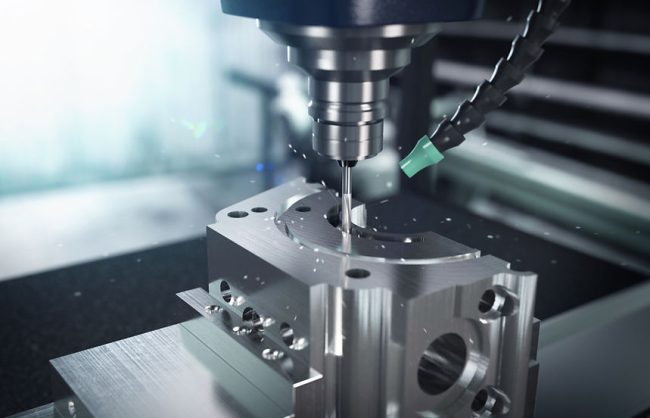
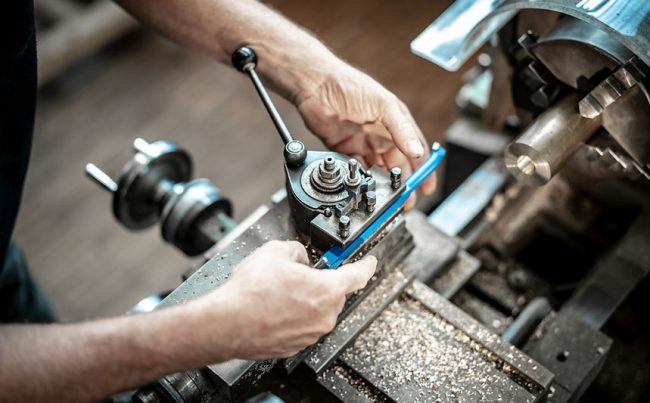
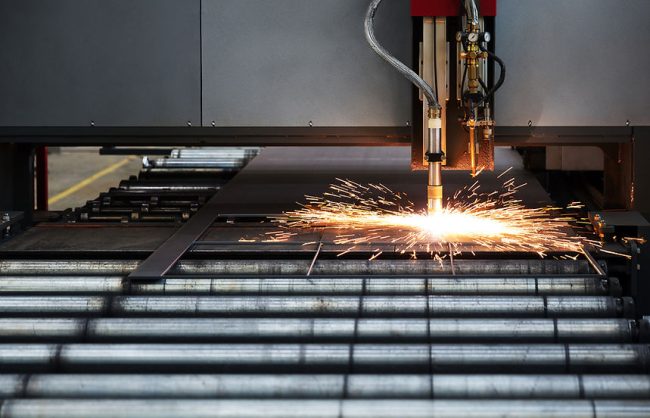
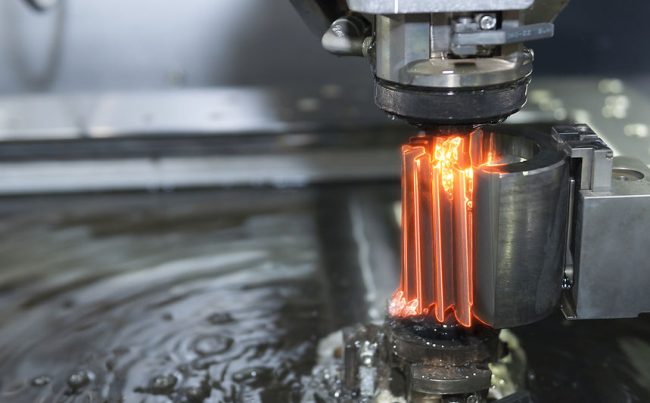
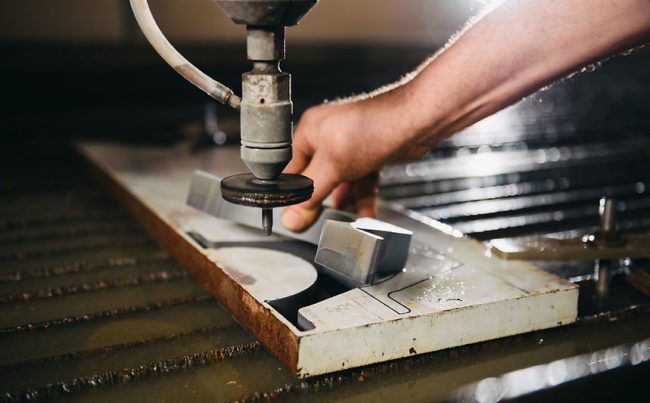
The Different Types of CNC Machines
In today’s CNC protocols, the production of parts via pre-programmed software is mostly automated. The dimensions for a given part are set into place with computer-aided design (CAD) software and then converted into an actual finished product with computer-aided manufacturing (CAM) software.
Any given workpiece could necessitate a variety of machine tools, such as drills and cutters. In order to accommodate these needs, many of today’s machines combine several different functions into one cell.
Alternately, an installation might consist of several machines and a set of robotic hands that transfer parts from one application to another, but with everything controlled by the same program. Regardless of the setup, the CNC process allows for consistency in parts production that would be difficult, if not impossible, to replicate manually.
What Else Can a CNC Machine Do?
As plenty of CNC machine video demonstrations have shown, companies use CNC machines to make highly detailed cuts out of metal pieces for industrial hardware products. In addition to the aforementioned machines, you can find several other common pieces of machinery used in CNC manufacturing to produce highly detailed and accurate CNC products. Some of the most common products produced by CNC machines include steel aerospace parts, metal automotive components, wooden decorations and plastic consumer goods pieces.
Since these CNC products have unique requirements, CNC machines regularly utilize other tools and components. Check out some of the primary pieces of machinery used within CNC systems:
- Embroidery machines
- Wood routers
- Turret punchers
- Wire-bending machines
- Foam cutters
- Laser cutters
- Cylindrical grinders
- 3D printers
- Glass cutters
Since CNC machinery can implement so many other tools and components, you can trust it to produce an almost limitless variety of goods quickly and accurately. For example, when complicated cuts need to be made at various levels and angles on a workpiece, it can all happen within minutes on a CNC machine.
As long as the machine is programmed with the right code, the machine functions will carry out the steps as dictated by the software. Providing everything is coded according to design, a product of detail and technological value should emerge once the process has finished.
Choose Astro Machine Works for Your CNC Manufacturing Needs
Since CNC machinery can implement so many other tools and components, you can trust it to produce an almost limitless variety of goods quickly and accurately. For example, when complicated cuts need to be made at various levels and angles on a workpiece, it can all happen within minutes on a CNC machine.
As long as the machine is programmed with the right code, the machine functions will carry out the steps as dictated by the software. Providing everything is coded according to design, a product of detail and technological value should emerge once the process has finished.